Smart Home Devices That Lower Insurance Costs
124 views
You fix a dripping faucet, replace worn weather stripping, and even trim the tree hanging over the roof. Then the insurance renewal arrives anyway, and the premium climbs.
Frustrating.
What many homeowners don't realize is that insurance companies aren't only looking at your home's age or ZIP code. They're also trying to estimate one thing above everything else: risk. The fewer expensive claims you're likely to file, the more attractive you become as a policyholder.
That's where smart home technology quietly earns its place.
I've installed quite a few of these devices over the years—some because I genuinely wanted the convenience, others because I was curious whether insurers actually cared. A few gadgets turned out to be little more than fancy toys. Others caught problems before they became disasters. After seeing a tiny water sensor save a friend's hardwood flooring from a washing machine leak, I stopped thinking of these products as luxury gadgets.
They're preventive maintenance with Wi-Fi.
Why insurers pay attention to smart home technology
Insurance companies make money by collecting premiums and paying out fewer claims. It sounds obvious, but that simple equation explains why some insurers encourage smart home devices.
Fire. Water damage. Burglaries. Frozen pipes. These account for a significant portion of residential insurance claims. If technology reduces the chance of those events—or limits the damage once they start—everyone benefits.
Not every insurer offers discounts, though.
Some companies provide premium reductions for qualifying devices. Others don't advertise discounts but may still view homes with monitored safety systems more favorably during underwriting. A few even partner with device manufacturers or offer discounted equipment.
The key isn't owning smart gadgets.
It's owning the right ones.
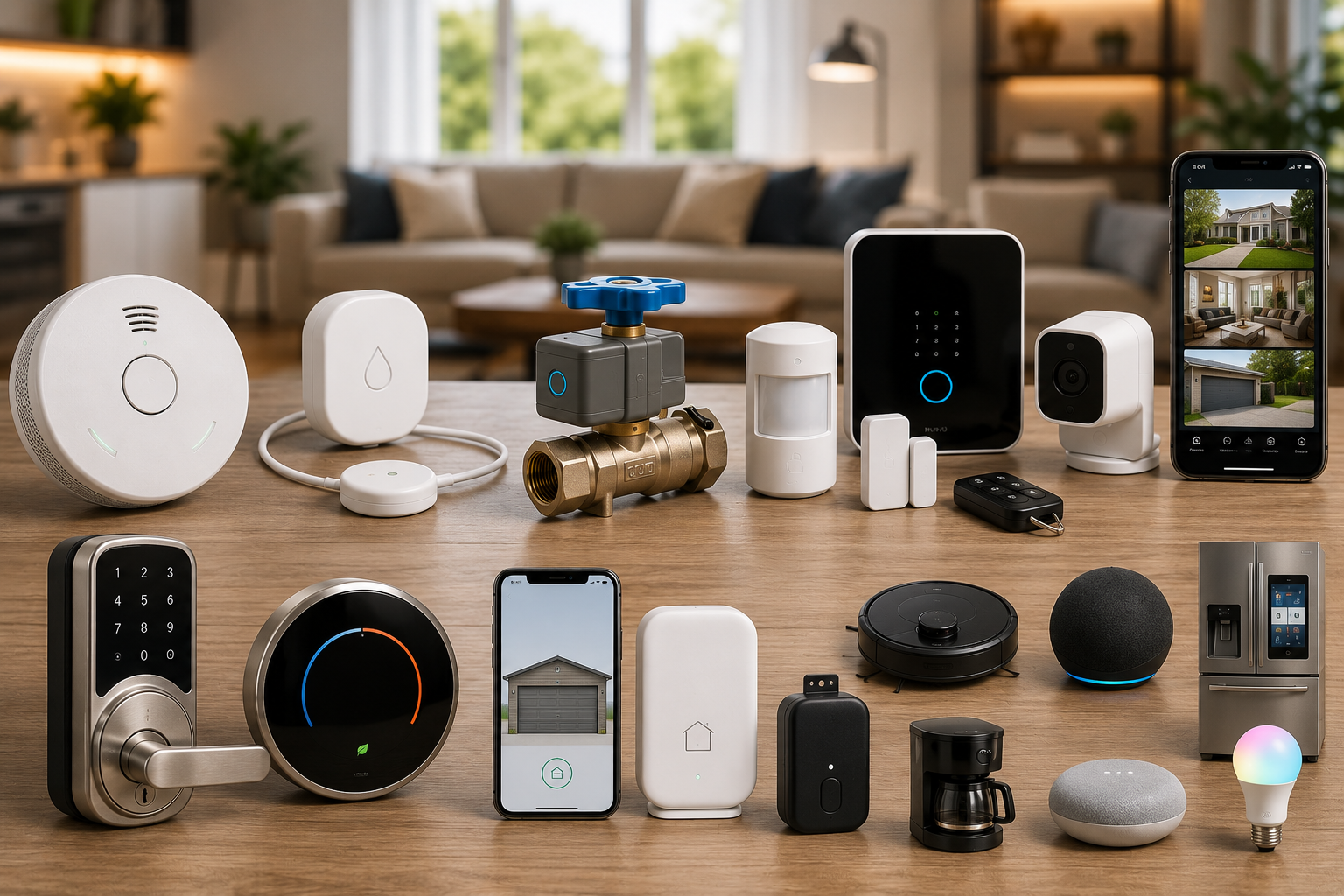
Smart smoke and carbon monoxide detectors
Traditional smoke alarms save lives. Smart versions add another layer of protection.
Imagine you're at work and a detector senses smoke from a forgotten pan on the stove. Instead of waiting until a neighbor notices, your phone buzzes instantly. If the system is professionally monitored, emergency services may even be notified automatically.
That extra response time matters.
Why insurers like them
A fire discovered in its earliest stage often causes dramatically less damage than one burning unnoticed for twenty minutes.
Many smart detectors also perform self-checks, alerting you when batteries run low or sensors need replacement. That reduces the chance of an alarm quietly failing for months without anyone noticing.
One mistake I made early on? Assuming every detector was connected.
It wasn't.
One upstairs bedroom still had an old standalone alarm while the rest of the house had interconnected smart detectors. Mixing systems like that creates blind spots.
Water leak sensors: tiny devices, huge savings
Water damage rarely announces itself dramatically.
More often, it's a slow drip behind the washing machine. A leaking water heater. A cracked dishwasher hose that quietly soaks subflooring overnight.
Those repairs become expensive surprisingly fast.
Small wireless leak sensors sit near appliances, under sinks, beside sump pumps, or around water heaters. The moment moisture appears, they send an alert.
Some systems go much further.
Pair the sensors with a smart automatic shutoff valve, and the home's main water supply can close automatically after detecting a major leak.
That's exactly the sort of loss prevention insurers appreciate.
Best places to install leak sensors
Under kitchen and bathroom sinks
Behind washing machines
Around water heaters
Near HVAC condensate drains
Beside sump pumps
Under refrigerators with water dispensers
A single sensor costs far less than replacing hardwood floors.
Smart security systems reduce multiple risks
Visible security systems don't guarantee burglars will stay away.
They do increase the effort and risk involved.
Modern systems combine several technologies into one network:
Motion sensors
Entry sensors
Smart cameras
Glass-break detectors
Professional monitoring
Mobile alerts
Some insurers specifically recognize professionally monitored security systems when calculating discounts.
Others simply appreciate documented protection measures if a claim occurs.
There's another benefit people rarely mention.
Packages.
Video doorbells and outdoor cameras help deter porch theft while also providing evidence if something disappears.
Smart locks add another layer of protection
We've all done it.
Driven halfway to work before wondering, Did I lock the front door?
Smart locks eliminate the guessing.
You can verify lock status remotely, create temporary access codes for contractors, and receive notifications whenever someone enters.
That doesn't necessarily translate into a large insurance discount on its own, but smart locks complement broader home security systems.
Just don't skip basic maintenance.
Electronic hardware still needs fresh batteries, firmware updates, and occasional testing.
Freeze protection matters more than many homeowners expect
Frozen pipes become incredibly expensive once they burst.
Many smart thermostats help prevent that scenario by maintaining safe indoor temperatures even when nobody is home.
Some systems also detect unusual temperature drops and notify homeowners before pipes freeze.
Vacation homes benefit especially from these alerts.
Leaving a cabin empty for several weeks without temperature monitoring can become an expensive gamble.
A small habit worth adopting
Before leaving for extended trips:
Check thermostat connectivity.
Confirm alerts are reaching your phone.
Simple. Easy to forget.
Smart garage door controllers
Garage doors often become the home's largest unsecured opening.
Smart controllers allow homeowners to:
Close the garage remotely.
Receive notifications when it's left open.
View activity history.
Grant temporary access without sharing permanent codes.
While these devices rarely earn standalone insurance discounts, they reduce opportunities for theft and unauthorized entry.
That's still valuable.
Not every smart device lowers insurance costs
Marketing can make almost anything sound insurance-friendly.
Reality is less exciting.
Robot vacuums, smart speakers, connected coffee makers, voice assistants, automated lighting, and smart refrigerators usually have little direct impact on homeowners insurance pricing.
Convenience?
Absolutely.
Risk reduction?
Not so much.
Insurers focus on devices that help prevent or minimize costly claims.
That's the difference.
Professional monitoring often matters
Here's something many homeowners miss.
Installing security equipment yourself doesn't always qualify for the same benefits as a professionally monitored system.
Requirements vary by insurer, but discounts sometimes depend on:
24/7 monitoring
Certified installation
Central station response
Documentation showing active service
Always verify eligibility before assuming a discount applies.
A quick phone call can prevent disappointment later.
Questions to ask your insurance company
Every insurer uses different underwriting guidelines.
Before purchasing expensive equipment, ask:
Which smart devices qualify for discounts?
Does professional monitoring matter?
Are certain brands preferred?
Do I need proof of installation?
Is the discount automatic or must I request it?
You might discover your insurer already has partnerships offering reduced device prices.
Worth checking.
Installation mistakes that limit the benefits
Smart technology only helps if it actually works.
I've seen homeowners install leak sensors in obvious places while forgetting the water heater tucked away in a utility closet. Others mounted outdoor cameras so high they captured beautiful views...and almost no usable faces.
Common mistakes include:
Ignoring firmware updates
Allowing device batteries to die
Disabling notifications because they seemed annoying
Placing sensors too far from likely problem areas
Forgetting to reconnect devices after changing Wi-Fi routers
None of these failures happen dramatically.
Things simply stop working.
Months later, nobody remembers.
Smart homes aren't maintenance-free
Technology isn't a substitute for regular inspections.
Roofs still age.
Pipes still corrode.
Trees still lose branches during storms.
Think of smart devices as extra sets of eyes watching the house while you're busy living your life. They improve awareness, shorten response times, and often reduce damage—but they can't repair worn plumbing or replace routine maintenance.
The homeowners who get the most value usually combine both approaches.
Old-fashioned inspections.
Modern alerts.
Together, they're surprisingly effective.
Frequently Asked Questions
Do all insurance companies offer smart home discounts?
No. Some insurers provide specific discounts, others evaluate smart devices during underwriting without listing separate discounts, and some currently offer no incentives at all.
Which smart device has the biggest impact on preventing claims?
Water leak detection systems with automatic shutoff valves are widely regarded as some of the most effective because water damage claims can become extremely expensive if leaks continue unnoticed.
Can I install smart devices myself?
Many leak sensors, smart locks, thermostats, and smoke detectors are designed for DIY installation. Professionally monitored security systems, however, may require certified installation if you want to qualify for certain insurance discounts.
Will smart cameras reduce my premium?
Not necessarily. Cameras help deter theft and provide evidence after incidents, but insurers often place greater value on comprehensive monitored security systems than cameras alone.
Should I tell my insurer after installing smart devices?
Yes. Don't assume they'll notice automatically. Contact your insurance company, provide documentation if requested, and ask whether any discounts or underwriting adjustments are available.
Build your protection one device at a time
You don't need to transform your house into a futuristic showroom overnight.
Start with the risks most likely to cost you money. Water leak sensors are inexpensive and remarkably effective. Smart smoke detectors add another layer of protection. If security is a concern, expand into monitored alarm systems and connected locks as your budget allows.
The goal isn't collecting gadgets. It's reducing the chance that a small problem quietly turns into a five-figure insurance claim—and, if your insurer rewards those improvements, enjoying lower premiums along the way.
smart home insurance discount
security system insurance savings
leak detector insurance
smart smoke detector insurance
connected home insurance
IoT insurance
Found this helpful? Share it!